
Plastic Mulch Leaves Behind Persistent Pollution that Threatens Soil Function
By Jacey Sillito
Plastic mulch films boost crop yields, but even best-practice removal leaves behind synthetic fragments that degrade soil health over time.
PNAS has published a study investigating agricultural plastic contamination across California farms: Read here.
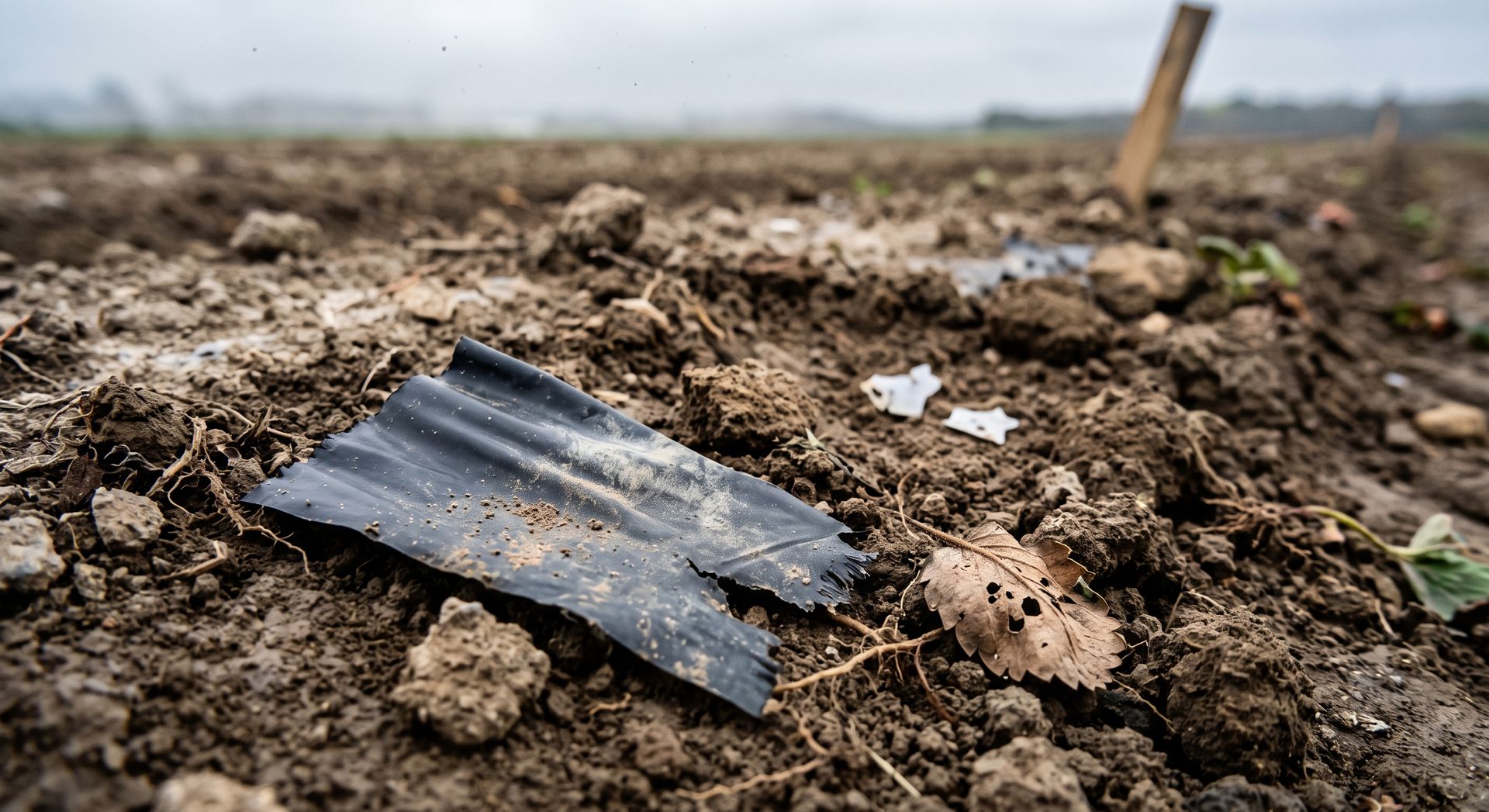
Researchers sampled strawberry fields across California's Central Coast following seasonal mulch removal and found surface soil plastic contamination in 100% of the surveyed fields. Polyethylene mulch fragments accounted for over 99% of the macroplastics recovered. While previous field studies focused on extreme contamination from poor management, this study demonstrated that even low-level plastic fragment accumulation—less than 10% of previously reported degradation thresholds—correlates with measurable declines in soil function.
Higher levels of surface macroplastics negatively correlated with key soil health indicators, including field soil moisture, microbial respiration, plant-available phosphate, and organic carbon pool sizes. Furthermore, macroplastic fragments positively correlated with microplastic concentration, confirming that larger plastic debris gradually breaks down into smaller particles within the soil matrix. As agricultural plastic film usage expands globally, improving management practices and developing viable biodegradable alternatives will be essential to prevent long-term soil degradation.