
Inhaling Microplastics: What Pulmonary Research Reveals about Synthetic Air Particles
By Jacey Sillito
Airborne microplastics pose a serious, invisible threat to human lung health. Learn about how inhaling synthetic particles causes severe tissue damage and respiratory inflammation.
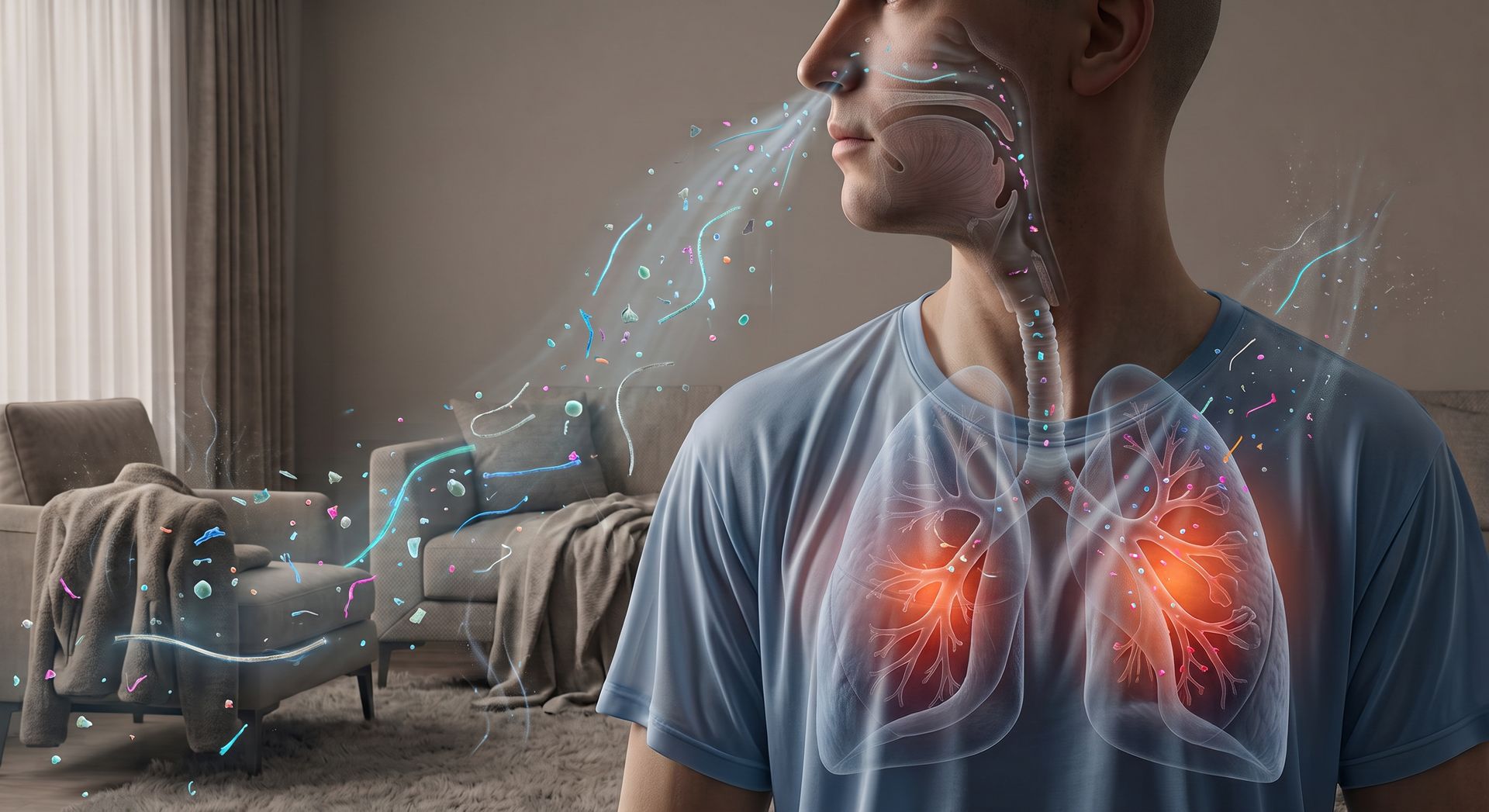
Microplastics in our air are becoming an invisible threat to human respiratory health. These tiny plastic particles float through both outdoor and indoor spaces, where people inhale them directly into the deepest parts of the lungs.
Frontiers in Toxicology has published a review on the threat of airborne plastics: https://www.frontiersin.org/journals/toxicology/articles/10.3389/ftox.2022.958414/full
While plastic pollution in oceans and food gets the most public attention, the synthetic fibers floating in living rooms may be doing immediate harm to human airways. Researchers are beginning to uncover how inhaled microplastics settle inside lung tissue and sputum, creating serious complications for individuals with pre-existing respiratory conditions.
How Microplastics damage the lungs
When inhaled synthetic fibers enter the respiratory tract, they quickly disturb the body’s natural defenses. Nanoplastics coat the protective fluid lining inside the alveoli, breaking down the essential lipid barrier that keeps air sacs open and functioning normally. At the same time, exposure to common polymers like polystyrene degrades tight junction proteins between cells, making lung tissue porous and increasingly vulnerable to external toxins. Smaller particles even penetrate directly into lung epithelial cells, triggering rapid cell death and altering normal lung architecture over time.
Inflammation and Oxidative Stress
Inhaled plastics do not simply sit harmlessly in the airways; they provoke an aggressive chemical immune response. Research demonstrates that microplastics trigger lung cells to overproduce pro-inflammatory signaling proteins such as TNF-a, IL-6, and TGF-β. These elevated inflammatory signals are directly linked to chronic conditions like refractory asthma, severe airway hyperresponsiveness, and pulmonary fibrosis. Furthermore, exposure depletes critical natural antioxidants in bronchial cells, causing severe oxidative stress and accelerating long-term tissue damage.
A Hidden Danger for Asthma and Allergies
Airborne microplastics also act as a physical amplifier for common environmental triggers. When household allergens like dust mites and microplastics enter the airways simultaneously, the plastic particles exacerbate the allergic response, causing significantly greater mucus hypersecretion and severe airway inflammation than allergen exposure alone.
Conclusion
Airborne microplastics are an inescapable reality of modern life, constantly shedding from synthetic clothing, carpets, and household furnishings. Understanding how these airborne particles interact with human tissue is critical to holding synthetic manufactures accountable and protecting public health.