
How Fossil Fuel Lobbying Is Delaying the Global Plastics Treaty
By Jacey Sillito
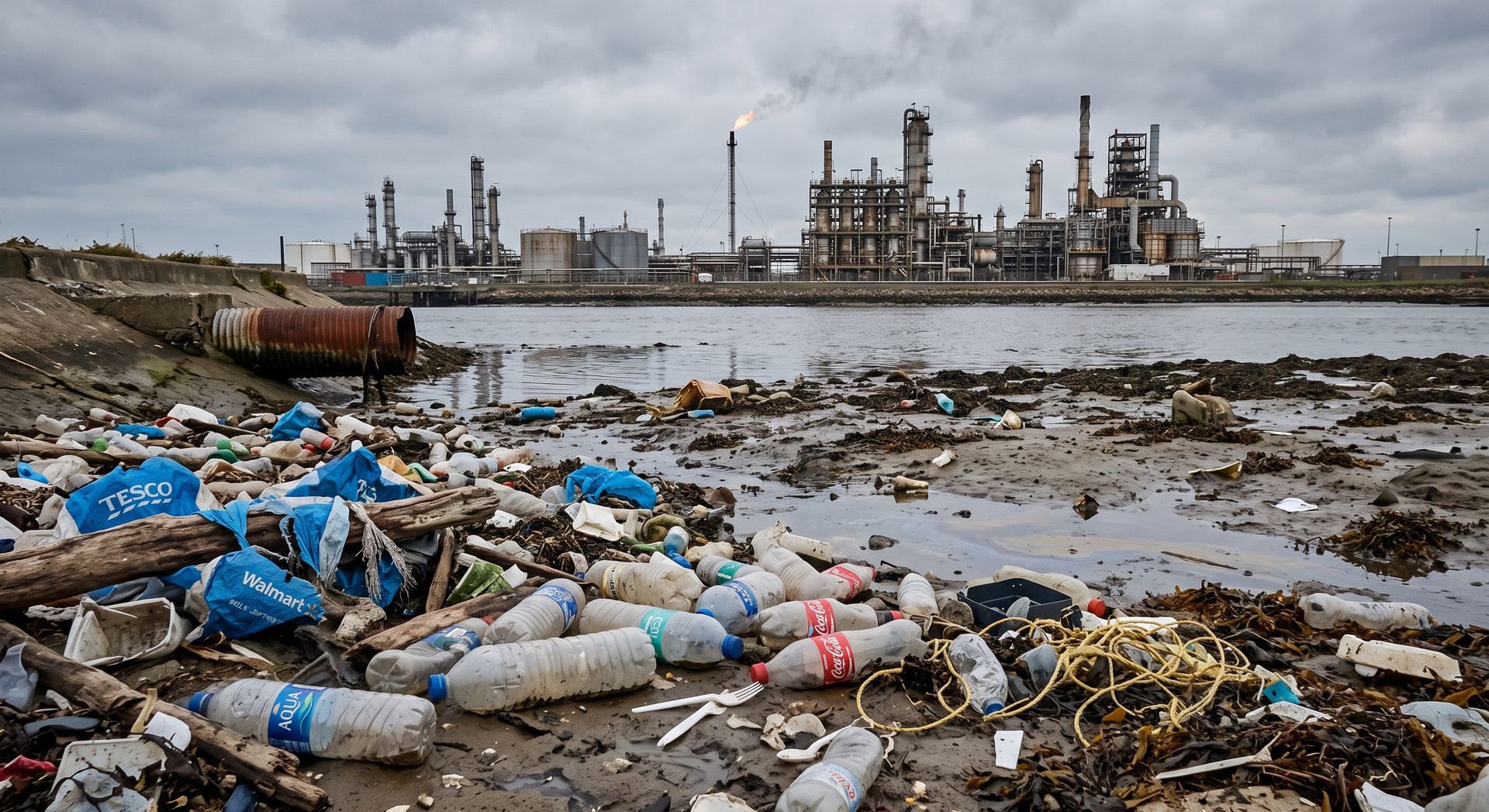
As world leaders struggle to finalize the UN Global Plastics Treaty, powerful fossil fuel and petrochemical companies continue deploying armies of lobbyists to weaken binding production limits and protect industry profits.
Greenpeace UK published an investigative report exposing corporate influence in global plastics policy: Click here to learn more.
Data obtained by Greenpeace reveals that since treaty negotiations began in November 2022, just seven major petrochemical companies—including Dow, ExxonMobil, Shell, and INEOS—have produced enough plastic to fill 6.3 million garbage trucks, or roughly five and a half trucks every minute. During this exact same timeframe, these companies expanded their plastic manufacturing capacity by 1.4 million tons, locking in decades of future pollution. To safeguard these investments, fossil fuel lobbyists flooded the INC-5 negotiation rounds in South Korea, outnumbering independent scientists three-to-one and representing the single largest delegation at the talks. Rather than accepting caps on virgin plastic production, corporate actors continue pushing downstream waste management and chemical recycling to shift accountability away from producers. This intense corporate pushback came to a head at the INC-5.2 negotiation round in Geneva, Switzerland, which concluded without consensus, forcing a resumption of talks.