
Unpacking the microscopic threat of plastic pollution
By Jacey Sillito
Microplastics are now a global health issue. These microscopic particles absorb industrial toxins, disrupt marine life, and end up in the food we eat. Here is how they spread, where they come from, and why their toxic footprint matters for our future.
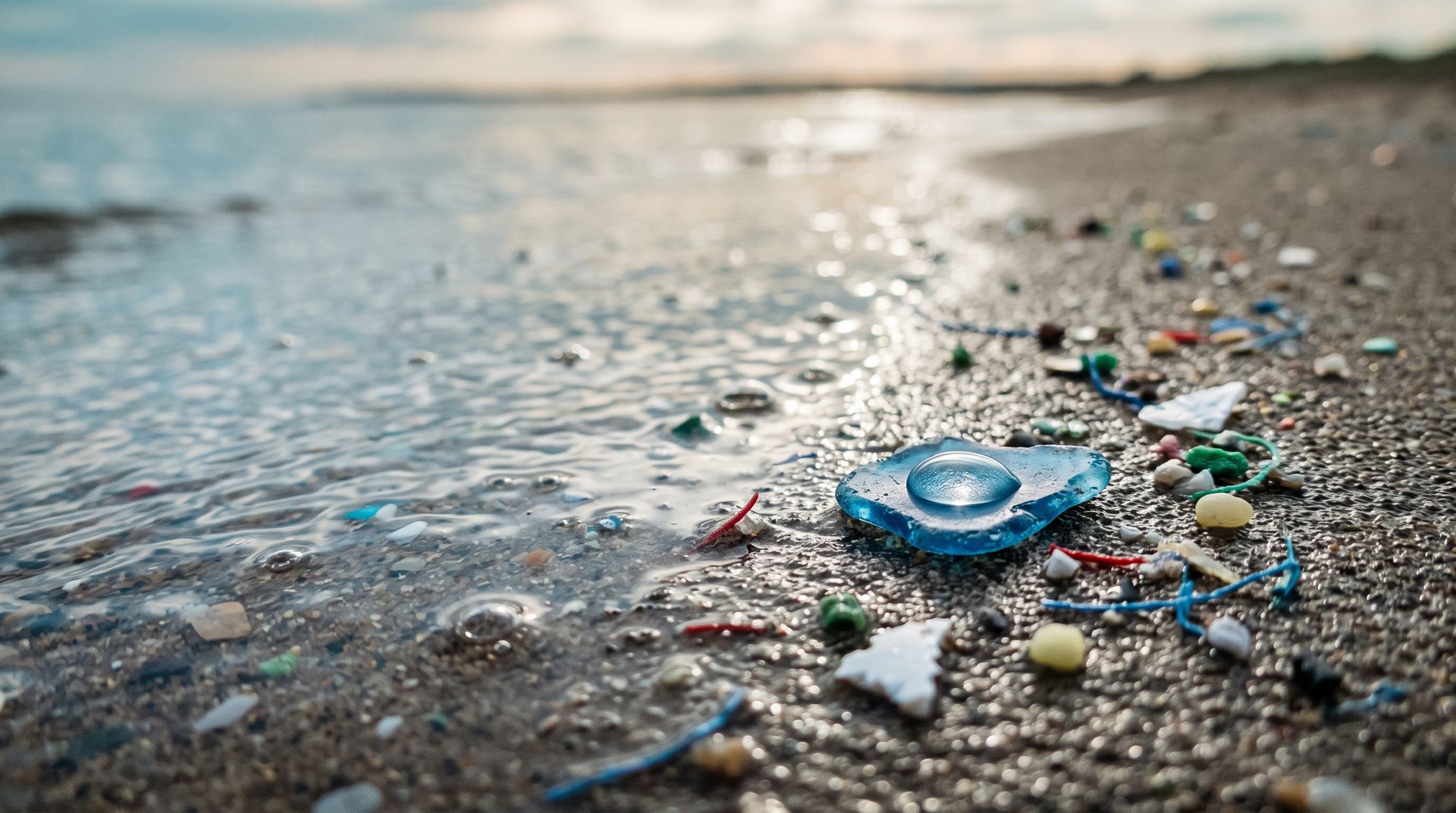
Beyond the visible debris floating in rivers and seas lies an invisible environmental threat. Tiny synthetic particles—measuring anywhere from under 5 millimeters down to nanoscale dimensions—are now embedding themselves in ecosystems across the globe by drifting through the atmosphere, washing through watersheds, and settling into agricultural soils.
A recent comprehensive review details the primary drivers behind this contamination, mapping out how common single-use items break down under continuous solar exposure, physical wave abrasion, and chemical degradation. As these particles fragment, their high surface area allows them to act as magnets for heavy metals and persistent organic pollutants. When fish, shellfish, and other wildlife consume these toxic-coated particles, the contaminants bioaccumulate up the food web, eventually posing risks to human organ systems and metabolic health.
How do these persistent particles migrate through different environmental matrices, what damage do they cause at a cellular level, and what modern detection tools are scientists using to track them? Read the full study to find out.